可伸缩导航栏




特聘研究员
基础生命科学研究员
博士后
博士
硕士
学士
课题组聚焦病毒-宿主相互作用机制,综合运用反向遗传学、病毒学、细胞生物学等方法,结合高通量基因功能筛选与多组学分析,系统识别病毒感染所依赖的宿主因子和病毒组分,构建病毒-宿主互作网络。在此基础上,挖掘可干预的关键节点,探索广谱抗病毒策略与干预方法。
乔文婕博士长期聚焦病毒-宿主互作机制与抗病毒策略研究,围绕病毒入侵、复制等关键过程,系统解析病毒蛋白功能,鉴定宿主关键调控因子并阐明其分子作用机制,探索具有转化潜力的抗病毒干预靶点。截至目前,以第一作者(含共同第一作者)在Science、Nature Communications、PNAS、Autophagy、mBio等期刊发表研究论文,并作为共同作者在Nature、Cell、The EMBO Journal等期刊发表研究成果。
代表性论文:
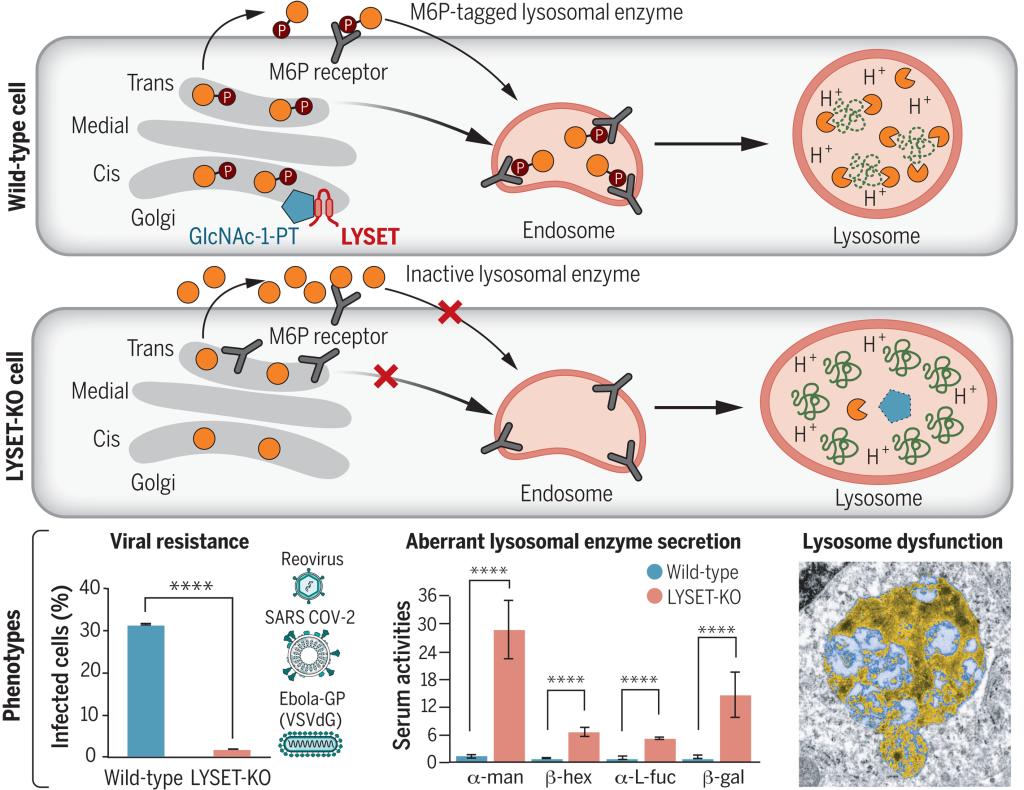
1.发现并命名溶酶体酶运输因子LYSET,揭示其在维持溶酶体稳态和病毒感染中的作用,并阐明其与溶酶体贮积病—Ⅱ型黏多糖贮积症(mucolipidosis II)的致病关联。
(Science, 2022, https://doi.org/10.1126/science.abn5648)
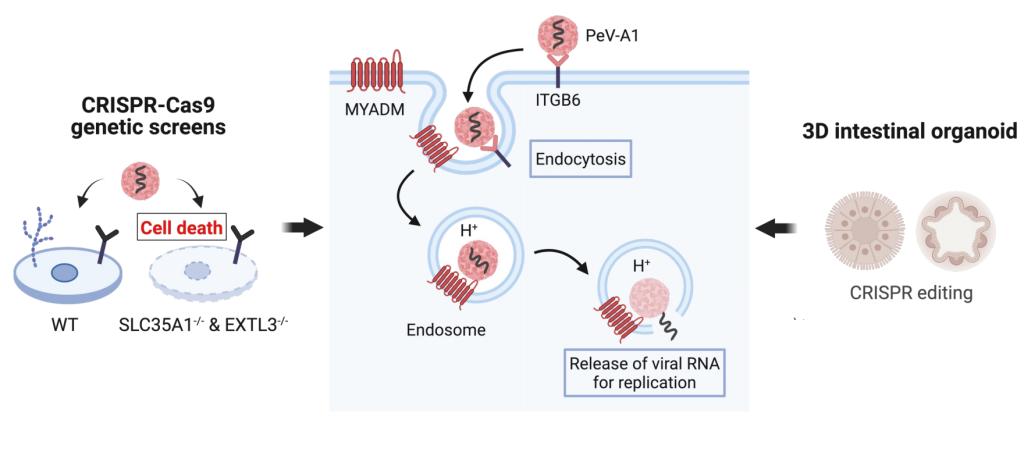
2.鉴定MYADM为人类parechovirus的宿主受体,阐明其在病毒入侵过程中的关键功能。
(Nature Communications, 2024,https://doi.org/10.1038/s41467-024-47825-0)
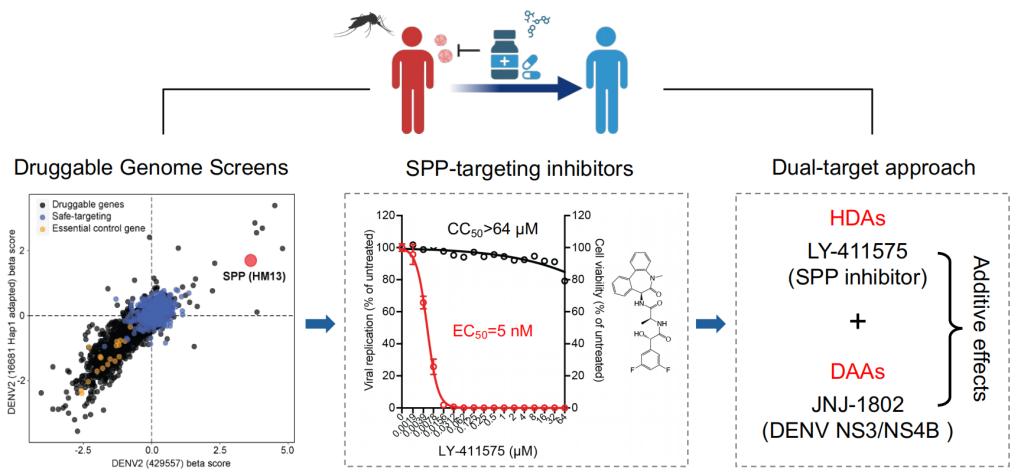
3.筛选并鉴定SPP为黄病毒感染所必需的关键宿主因子,并证明靶向SPP的小分子化合物具有显著的广谱抗黄病毒活性。
(PNAS, 2025,https://doi.org/10.1073/pnas.2421573122)
1.Richards, C. M.†, Jabs, S.†, Qiao, W.†, Varanese, L. D., Schweizer, M., Mosen, P. R., Riley, N. M., Klüssendorf, M., Zengel, J. R., Flynn, R. A., Rustagi, A., Widen, J. C., Peters, C. E., Ooi, Y. S., Xie, X., Shi, P. Y., Bartenschlager, R., Puschnik, A. S., Bogyo, M., Bertozzi, C. R., Blish, C. A., Winter, D., Nagamine, C. M., Braulke, T., Carette, J. E. (2022). The human disease gene LYSET is essential for lysosomal enzyme transport and viral infection. Science, 378(6615), eabn5648. https://doi.org/10.1126/science.abn5648 (†co-first author) (Featured on the cover)
2.Qiao, W., Richards, C. M., Kim, Y., Zengel, J. R., Ding, S., Greenberg, H. B., & Carette, J. E. (2024). MYADM binds human parechovirus 1 and is essential for viral entry. Nature communications, 15(1), 3469. https://doi.org/10.1038/s41467-024-47825-0
3.Qiao, W., Xie, X., Shi, P. Y., Ooi, Y. S., & Carette, J. E. (2025). Druggable genome screens identify SPP as an antiviral host target for multiple flaviviruses. PNAS, 122(8), e2421573122. https://doi.org/10.1073/pnas.2421573122
4.Qiao, W., Richards, C. M., & Jabs, S. (2023). LYSET/TMEM251-a novel key component of the mannose 6-phosphate pathway. Autophagy, 19(7), 2143–2145. https://doi.org/10.1080/15548627.2023.2167376
5.Qiao, W., Medina, V., Kuo, Y. W., & Falk, B. W. (2018). A Distinct, Non-Virion Plant Virus Movement Protein Encoded by a Crinivirus Essential for Systemic Infection. mBio, 9(6), e02230-18. https://doi.org/10.1128/mBio.02230-18
6.Qiao, W., Zarzyńska-Nowak, A., Nerva, L., Kuo, Y. W., & Falk, B. W. (2018). Accumulation of 24 nucleotide transgene-derived siRNAs is associated with crinivirus immunity in transgenic plants. Molecular plant pathology, 19(10), 2236–2247. https://doi.org/10.1111/mpp.12695
7.Qiao, W., & Falk, B. W. (2018). Efficient Protein Expression and Virus-Induced Gene Silencing in Plants Using a Crinivirus-Derived Vector. Viruses, 10(5), 216. https://doi.org/10.3390/v10050216 (Featured on the cover)
联系方式
地址:深圳市光明区高科创新中心
电话:+86-755-86967710
邮箱:webmaster@szbl.ac.cn
邮编:518132
Copyright © 2026 深圳湾实验室 版权所有www.szbl.ac.cn All Rights Reserved.粤ICP备19032884号 粤公网安备44031102000926号